Considering Robotic Prostatectomy in India? Cost, Hospital Stay, Catheter, Continence and Recovery
Choosing cancer surgery in another country is not only a medical decision. You must compare the surgeon and hospital, understand the quotation, plan catheter care and recovery, arrange travel, and know who will monitor PSA after you return home.
This guide is for patients considering robotic radical prostatectomy in India, including families travelling from Tanzania, Kenya, Uganda, Nigeria, Oman, the UAE and other regions. It explains the questions that should be answered before booking a flight.
Quick answer
- Robotic prostatectomy removes the prostate and seminal vesicles for selected prostate cancers.
- Suitability depends on cancer grade, stage, PSA, imaging, health and personal priorities.
- Cost quotations should be itemised and based on medical-record review.
- A catheter commonly remains after discharge; continence and erectile recovery take time.
- International planning must include accommodation, fitness to fly, catheter removal and long-term PSA follow-up.
Who may be considered for robotic radical prostatectomy?
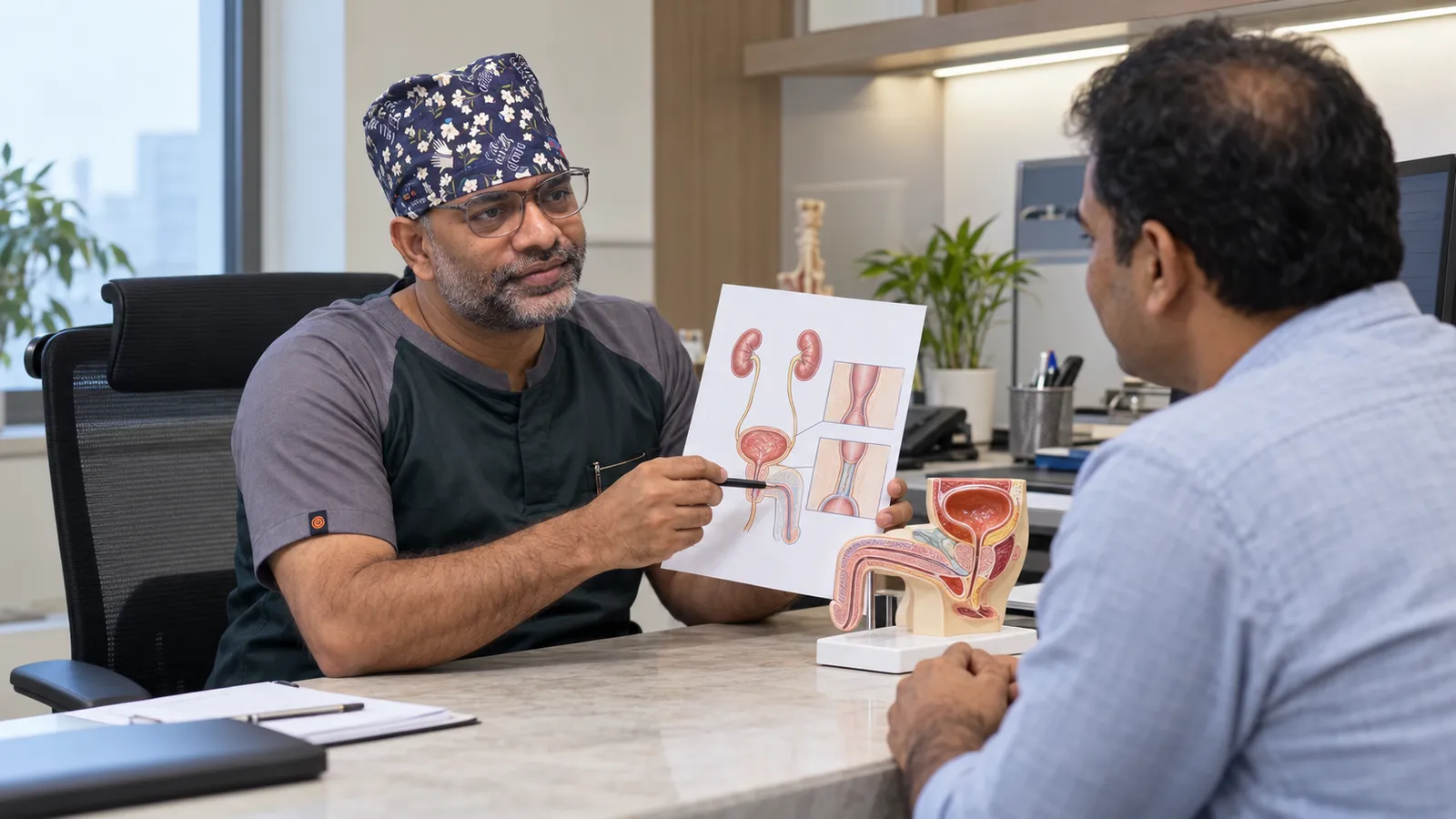
Surgery is one option for selected clinically localized and some locally advanced prostate cancers. It is not automatically the best treatment for every positive biopsy. Active surveillance may suit low-risk disease; radiotherapy can offer an alternative curative approach; systemic treatment is central when cancer has spread.
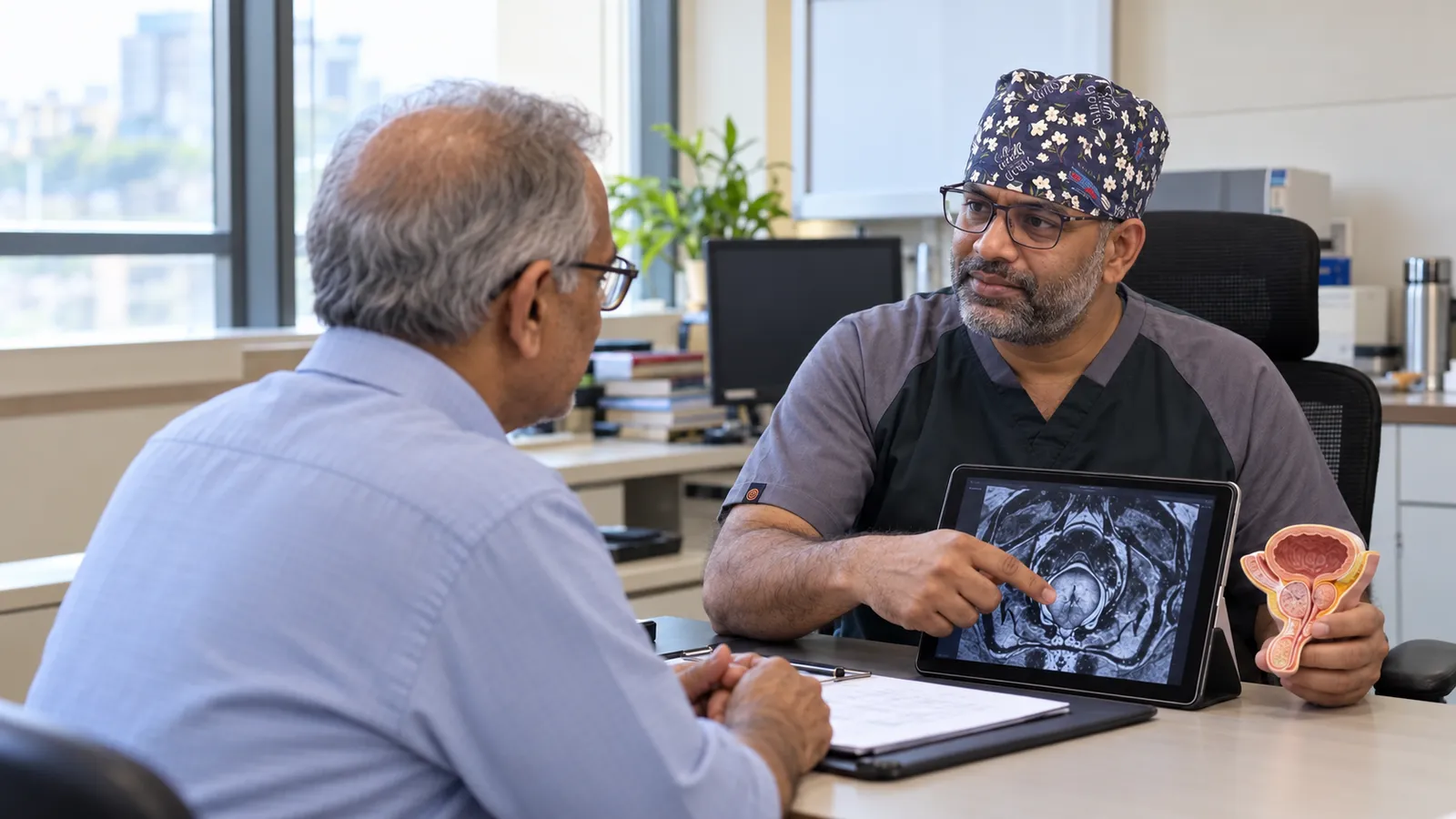
Decision-making uses the biopsy Grade Group, number and location of positive cores, PSA and trend, multiparametric MRI, clinical stage, life expectancy and sometimes PSMA PET/CT. A multidisciplinary discussion is especially valuable for high-risk or complex disease.
What happens during robotic prostatectomy?
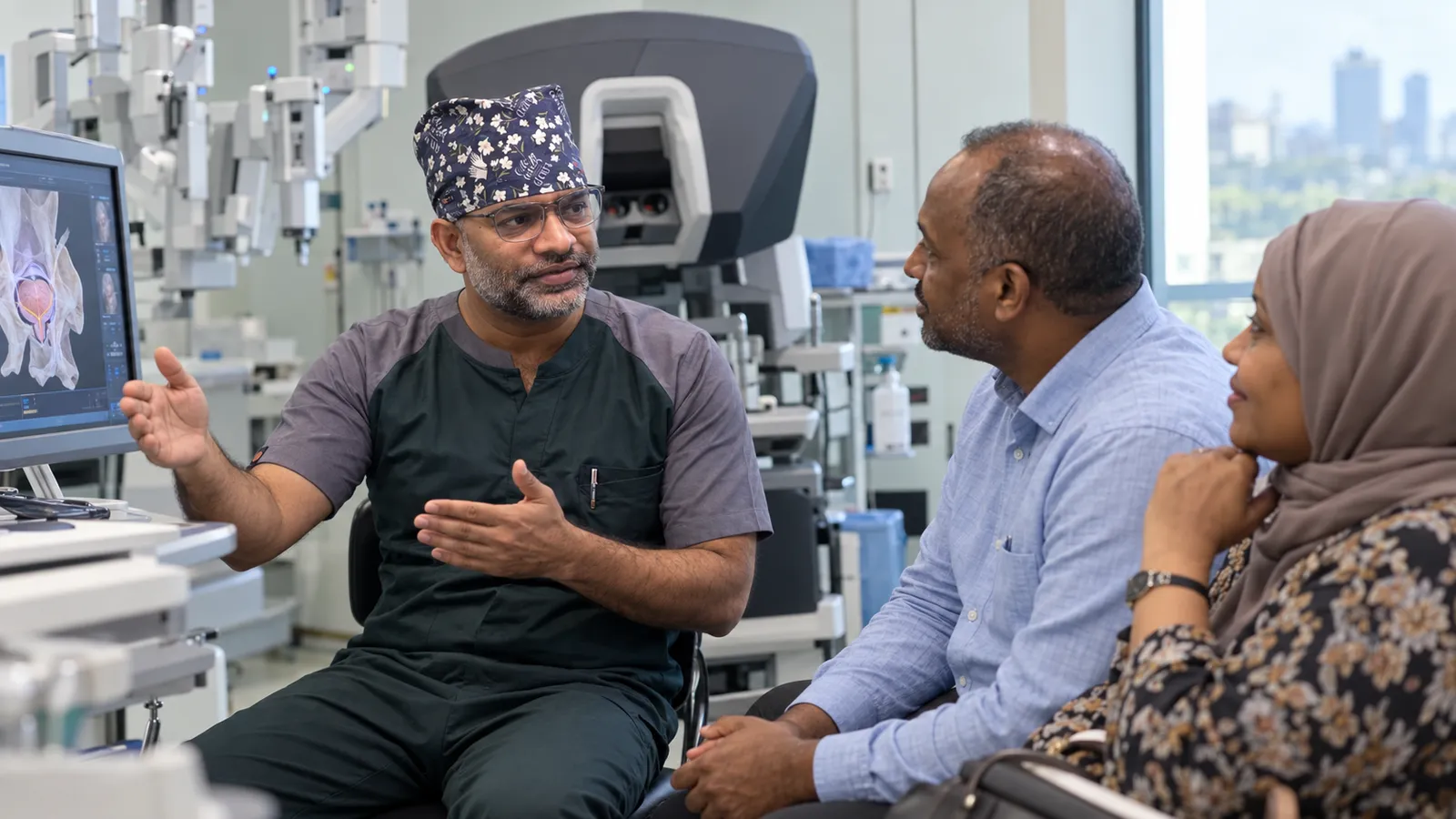
The surgeon controls robotic instruments through several small abdominal ports. The prostate and seminal vesicles are removed, the bladder is reconnected to the urethra, and lymph nodes may be sampled or removed when indicated. The robot does not operate independently; the surgeon performs every step from the console.
Potential advantages over open surgery include smaller incisions, less blood loss and faster early recovery in many patients. Important risks remain: bleeding, infection, blood clots, urine leak, bladder-neck narrowing, urinary incontinence, erectile dysfunction and the possibility of additional cancer treatment.
Nerve sparing: an oncological decision, not a promise
Nerves involved in erections run close to the prostate. One- or two-sided nerve sparing may be possible when MRI, biopsy and intraoperative findings suggest it will not compromise cancer clearance. If tumor appears close to a nerve bundle, wider excision may be safer. Ask your surgeon to explain the balance between negative margins and functional preservation.
What should the cost quotation include?
Published prices are only planning ranges. An itemised hospital quotation may include:
- surgeon, assistant and anaesthetist fees;
- robotic system and disposable instrument charges;
- operating theatre, medicines and consumables;
- room category, nursing and expected hospital stay;
- pathology and lymph-node analysis;
- catheter supplies and routine follow-up;
- preoperative tests and specialist clearances.
Ask what is excluded: blood products, ICU, treatment of complications, extra nights, PSMA PET/CT, biopsy review, hotel, flights, visa, companion expenses, rehabilitation and future radiotherapy or hormonal treatment. Final cost changes if the medical plan changes.
Typical hospital and recovery journey
Before surgery
The team reviews imaging and pathology, checks heart and lung fitness, manages blood-thinning medicines and explains bowel preparation or fasting. International pathology review may change the risk classification, so send slides early when requested.
Hospital stay
Patients are encouraged to walk early to reduce clot and chest risks. Pain control, urine output, eating and bowel recovery are monitored. Discharge occurs when the patient is medically stable—not according to a guaranteed package date.
Catheter period
The catheter protects the bladder-urethra connection while it heals. It often remains for roughly one to two weeks. Ask where it will be removed and whether imaging is required first. Learn catheter-bag care and the warning signs of blockage or infection.
Urinary continence after surgery
Leakage is expected immediately after catheter removal. Most patients improve over months, but the pace varies. Pelvic-floor exercises work best when taught correctly; doing excessive exercises with the wrong muscles can be unhelpful. Ask for preoperative instruction and a post-discharge rehabilitation plan.
Discuss how the clinic defines continence—zero pads, one safety pad or another measure—when comparing claimed results.
Erections and sexual recovery
Erectile recovery can take many months and sometimes longer. Baseline erections, age, diabetes, smoking, vascular disease, nerve sparing and adjuvant treatment matter. Penile rehabilitation may use tablets, vacuum devices, injections or other treatments. Orgasm can still occur, but ejaculation and natural fertility are lost after radical prostatectomy. Fertility preservation should be discussed before surgery when relevant.
How long should an international patient stay in Mumbai?
Do not plan travel using hospital nights alone. Allow time for preoperative review, surgery, early recovery, pathology discussion, catheter management and fitness-to-fly clearance. The safe duration differs by patient and flight length. Long flights also require a blood-clot prevention plan.
Before booking, confirm
- medical visa and invitation requirements;
- who meets you and where you will stay after discharge;
- emergency contact available day and night;
- catheter removal date and location;
- fit-to-fly letter and medicines for travel;
- PSA schedule and named follow-up doctor at home;
- how imaging, pathology and discharge records will be shared.
What records should you send?
- all PSA results with dates;
- biopsy report, block/slide details and any genomic tests;
- prostate MRI images in DICOM format and report;
- PSMA PET/CT or bone scan when performed;
- list of medicines, allergies and medical conditions;
- heart, lung and anaesthetic records;
- previous abdominal, prostate or urethral operation notes.
Follow-up after returning home
The final pathology determines stage, Grade Group, surgical margins and lymph-node findings. PSA is checked after recovery and then at defined intervals. A detectable or rising PSA may require early discussion of salvage radiotherapy or systemic treatment. International care is incomplete without a written follow-up pathway.
Robotic prostatectomy with Dr. Jamal Azmi in Mumbai
Dr. Jamal Akhtar Azmi is a consultant urologist, uro-oncologist and robotic surgeon. International patients can request a remote medical-record review before travel. A treatment recommendation and quotation can only be finalized after the cancer records and medical fitness are assessed.
Explore robotic prostatectomy in Mumbai
Medical references
Last medically reviewed: 31 October 2026. Outcomes and travel timing vary; no online guide can determine individual suitability.
International Robotic Prostatectomy
Frequently Asked Questions
How much does robotic prostatectomy cost in India?
Published estimates vary widely by hospital, city, room, robotic consumables, staging tests and case complexity. The final quotation should follow review of biopsy, MRI, PSA and medical fitness. Ask for an itemised estimate and what is excluded rather than relying on a headline price.
How long do patients stay in hospital after robotic prostatectomy?
Many uncomplicated patients leave within a few days, but discharge depends on mobility, pain, eating, urine drainage and medical conditions. International patients need additional recovery time near the hospital before they are cleared to fly.
How long is the urinary catheter kept?
A catheter commonly remains for about one to two weeks, although timing varies with the operation and healing. Removal should be planned before travel, either in Mumbai or with a named clinician at home.
Will urinary control return after prostatectomy?
Leakage is common immediately after catheter removal and usually improves over time. Recovery varies with age, baseline function, anatomy, surgical factors and pelvic-floor rehabilitation. No surgeon can guarantee a specific continence date.
Does nerve-sparing surgery preserve erections?
Nerve sparing may improve the chance of erectile recovery when it is oncologically safe, but it cannot guarantee potency. Age, baseline erections, diabetes, vascular health, cancer location, whether one or both nerve bundles can be preserved and rehabilitation all influence recovery.
What records should an international patient send before travelling?
Send PSA history, biopsy report and slides if available, prostate MRI images and report, staging scans such as PSMA PET/CT when performed, medication list, medical conditions and prior abdominal or prostate procedures. Images are often more useful than reports alone.